 USA Patriot Act Provisions
An Investor's Guide to Gold
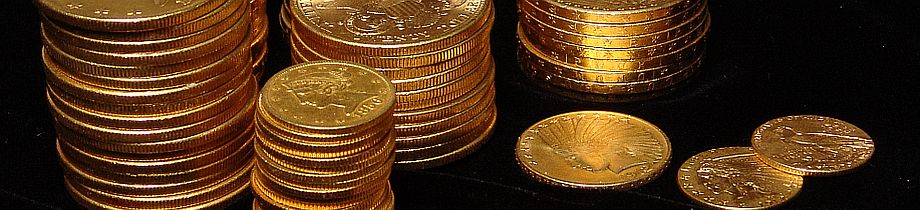
"There can be no other criterion, no other standard than gold. Yes, gold which never changes, which can be shaped into ingots, bars, coins, which has no nationality and which is eternally and universally accepted as the unalterable fiduciary value par excellence."
Charles De Gaulle (1890-1970)
The reasons for investing in gold have remained constant for centuries as a permanent store of value. Additionally, gold serves as insurance for the investor's personal wealth protection as well as as a portfolio diversifier.
Typical portfolios traditionally consist of stocks, bonds, mutual funds and money market instruments. Including gold in portfolios introduces a level of protection not found in other asset investments. Because the factors that influence the price of gold are generally independent from those that affect the prices of these other assets, gold can help offset market fluctuations and can reduce volatility. After the stock market crashes of 1987, 2000, & 2008 and amidst the recent economic downturn, gold has reestablished itself as a global asset class with unique properties.
In today's market, gold resides in a favorable environment as an investment that stands on its own. People seek gold as a reaction to the historical instability of financial institutions as well as the volatility of global paper currencies. As a result, the worldwide demand for gold is at near-record levels. In addition, global geopolitical and economic uncertainty further increases the potential for a rush toward gold, reinforcing its status as a safe haven for investors from all over the world.
Whether investors use an aggressive or conservative approach, gold can serve an important role in any portfolio. In 1997, as published in the Financial Perspective newsletter, Joel D. Perlin urged investors to keep 15% of their total wealth in tangible gold. That recommendation certainly can be considered reasonable if not conservative in today's economic climate to ensure total wealth preservation.
Typical portfolios traditionally consist of stocks, bonds, mutual funds and money market instruments. Including gold in portfolios introduces a level of protection not found in other asset investments. Because the factors that influence the price of gold are generally independent from those that affect the prices of these other assets, gold can help offset market fluctuations and can reduce volatility. After the stock market crashes of 1987, 2000, & 2008 and amidst the recent economic downturn, gold has reestablished itself as a global asset class with unique properties.
In today's market, gold resides in a favorable environment as an investment that stands on its own. People seek gold as a reaction to the historical instability of financial institutions as well as the volatility of global paper currencies. As a result, the worldwide demand for gold is at near-record levels. In addition, global geopolitical and economic uncertainty further increases the potential for a rush toward gold, reinforcing its status as a safe haven for investors from all over the world.
Whether investors use an aggressive or conservative approach, gold can serve an important role in any portfolio. In 1997, as published in the Financial Perspective newsletter, Joel D. Perlin urged investors to keep 15% of their total wealth in tangible gold. That recommendation certainly can be considered reasonable if not conservative in today's economic climate to ensure total wealth preservation.
________________________________________________________________________________________

For more than half a century, H.S. Perlin Co., Inc. has provided tangible gold holdings for our clients. We are a firm focused on gaining your trust and satisfaction by personalizing investment plans to best meet your current and future financial circumstances. Our principal mission is to create wealth protection strategies through the placement of a small percentage of your wealth in gold.
For more than half a century, H.S. Perlin Co., Inc. has provided tangible gold holdings for our clients. We are a firm focused on gaining your trust and satisfaction by personalizing investment plans to best meet your current and future financial circumstances. Our principal mission is to create wealth protection strategies through the placement of a small percentage of your wealth in gold.
________________________________________________________________________________________
1110 Silverado, La Jolla, CA 92037
Phone: 858.459.7803 / Fax: 858.459.7804
info@goldendures.com
Phone: 858.459.7803 / Fax: 858.459.7804
info@goldendures.com